
Table of Contents
Learning to drive is a big step in life. It gives you freedom, independence, and the power to explore. But before you can hit the road, you need to pass the written permit test. One of the most important parts of that test is understanding road signs. This is where a cheat sheet DMV road signs and meanings comes in handy. It’s a quick way to study and remember all those signs without feeling overwhelmed. In this article, we’ll walk you through everything you need to know about road signs – what they look like, what they mean, and how to recognize them fast. We’ve broken it all down into easy-to-understand sections, and we’ll explain everything in simple words. This is the only guide you’ll need to ace this part of your DMV test.
What Is a Cheat Sheet for DMV Road Signs?
A cheat sheet DMV road signs and meanings is a short and simple study tool. It lists the most common road signs you’ll see on the roads and during your permit test. Instead of reading long books or boring manuals, you can use a cheat sheet to remember the signs quickly. It shows signs with pictures and simple explanations. Think of it like a flashcard for your brain. Many driving students use it right before their test to do last-minute reviews. It’s great for visual learners and anyone who wants to feel more confident on test day. Best of all, it makes learning fun and easy.
Why Road Signs Are So Important
Road signs aren’t just there to decorate the streets. They give important information that keeps everyone safe. When you drive, you need to know what signs are trying to tell you. A stop sign tells you to stop. A yield sign warns you to slow down. A speed limit sign helps you avoid speeding tickets. Every sign has a purpose. Knowing the meanings helps you react fast and avoid accidents. If you don’t understand road signs, you may fail your DMV test or, worse, cause a crash. That’s why using a cheat sheet DMV road signs and meanings is so helpful for learning quickly and remembering clearly.
The Four Main Types of Road Signs
To make it easier, let’s group road signs into four main types. When studying your cheat sheet DMV road signs and meanings, knowing the categories helps a lot:
1. Regulatory Signs – These tell you what you must or must not do.
Examples: STOP, YIELD, SPEED LIMIT, DO NOT ENTER.
2. Warning Signs – These warn you about dangers ahead.
Examples: CURVE AHEAD, BUMP, SCHOOL ZONE, SLIPPERY WHEN WET.
3. Guide Signs – These help you find your way.
Examples: EXIT signs, HIGHWAY signs, MILE MARKERS, DIRECTIONAL ARROWS.
4. Construction Signs – These show work zones or road changes.
Examples: DETOUR, ROAD WORK AHEAD, MEN AT WORK.
Each has a different shape and color, which makes it easier to recognize them quickly.
What the Colors of Road Signs Mean
Colors help you know the meaning of a sign even before you read it. Here’s a quick guide you’ll find on your cheat sheet DMV road signs and meanings:
- Red – Stop, do not enter, or wrong way.
- Yellow – Warning about road conditions.
- White – Rules and regulations.
- Green – Guide signs or directional information.
- Blue – Traveler services like gas, food, or hospitals.
- Orange – Construction or detours.
- Brown – Parks and recreation.
When you see the color, your brain knows what to expect. This is super helpful especially for new drivers or nervous test-takers.
Road Sign Shapes and What They Tell You
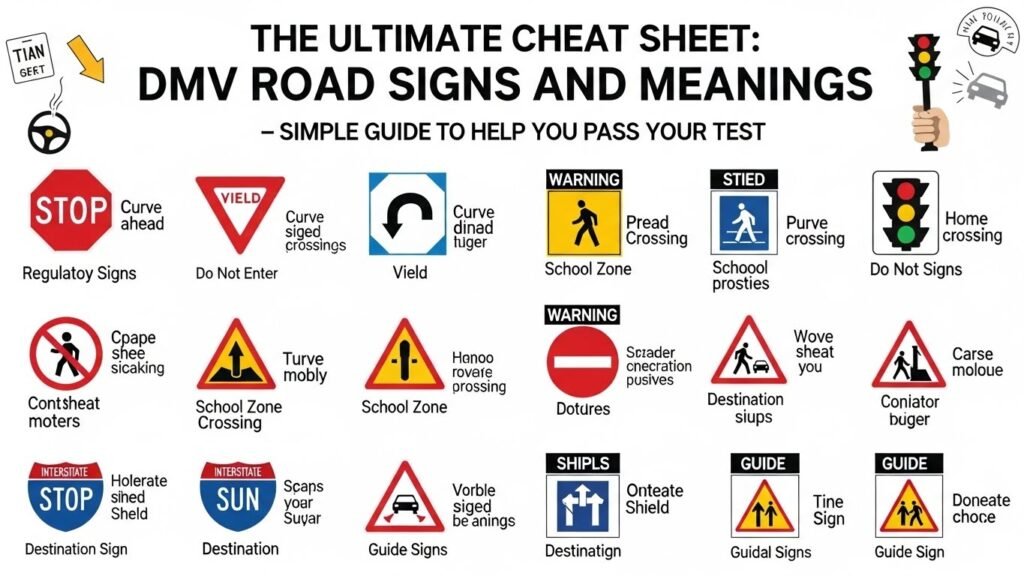
Besides colors, shapes of road signs are another key detail found on your cheat sheet DMV road signs and meanings. Here are the most common shapes and their meanings:
- Octagon (8 sides) – STOP
- Triangle (point down) – YIELD
- Circle – Railroad crossing
- Diamond – Warning signs
- Rectangle (vertical) – Regulatory signs (like speed limits)
- Rectangle (horizontal) – Guide signs and information
- Pentagon – School zones and crossings
By just looking at the shape, you can often guess the sign’s purpose—even from far away.
Common Regulatory Signs You Must Know
Regulatory signs are rules. Break them, and you could get fined or cause an accident. Key signs to look for on your cheat sheet DMV road signs and meanings:
- STOP SIGN – Come to a full stop.
- YIELD – Slow down and give way to others.
- SPEED LIMIT – Shows the fastest you can go legally.
- NO U-TURN – U-turns are not allowed here.
- ONE WAY – Traffic flows in one direction only.
- DO NOT ENTER – You’re not allowed to go this way.
Memorizing these is crucial for the test and for safe driving.
Must-Know Warning Signs for the DMV Test
Warning signs are super important. They keep you alert and ready for changes. Your cheat sheet DMV road signs and meanings will show signs like:
- Pedestrian Crossing
- Deer Crossing
- Lane Merging Ahead
- Sharp Turn or Curve
- Traffic Signal Ahead
- School Zone or Children Playing
These signs often show up in test questions where you have to choose what to do when you see one. Understanding them helps you act fast and drive safely.
Guide Signs and What They Help You With
Guide signs help drivers find their way. These signs appear in green, blue, or brown colors. Some helpful examples from your cheat sheet DMV road signs and meanings include:
- Exit Numbers on Highways
- Distance to Cities or Towns
- Rest Area Ahead
- Hospital or Gas Station Nearby
- Park Entrance or Scenic Route
While these may not seem important for your test, many are still included in questions about navigation and trip planning.
Construction Zone Signs You Can’t Ignore
Construction signs are super important because they change how the road works. These signs are always orange with black symbols or text. Your cheat sheet DMV road signs and meanings will include signs like:
- Road Work Ahead
- Flagger Ahead
- Detour Sign
- Uneven Lanes
- Reduced Speed Ahead
Expect to see a couple of these in the DMV test. They help you know when to slow down, change lanes safely, or watch for workers.
Extra Signs That Could Be On the Test
Besides the main categories, the cheat sheet DMV road signs and meanings may include a few extra symbols that often confuse people. These include:
- Roundabout Sign – Tells you a circular intersection is ahead.
- Slippery Road Sign – Often shown with a wiggly car icon.
- Bridge Heights/Weight Limits – Important for trucks or larger vehicles.
- Divided Highway Sign – Warns of a road splitting with medians.
Knowing these rare but test-worthy signs could give you an edge during your knowledge exam.
How to Study Using a Cheat Sheet
So how exactly do you use a cheat sheet DMV road signs and meanings to study smart? Here are some simple tips:
- Print it out and keep it with you.
- Practice flashcard style: Cover the meaning and quiz yourself.
- Study a few signs each day instead of all at once.
- Play games with friends or family using sign challenges.
- Test yourself online with visuals, not just text.
You don’t have to study for hours—just a little practice every day helps you remember the shapes, colors, and messages without stress.
FAQs
Q1: Are cheat sheets legal to use for the DMV test?
Yes, they are study tools—perfectly allowed before your test. Just don’t bring them into the testing room.
Q2: Where can I download a cheat sheet DMV road signs and meanings PDF?
You can find free versions on your state DMV website or trusted driving schools online.
Q3: How many road signs will be on the permit test?
Most DMV tests include 4–6 road sign questions, but it varies by state.
Q4: Can I study only the cheat sheet and still pass?
Yes! But it’s better to also read the driver’s handbook for full rules and situations.
Q5: What’s the best way to memorize road signs quickly?
Use a printed cheat sheet and quiz yourself daily. Pictures help more than plain text.
Q6: Do all states use the same road signs?
Most signs are standard across the U.S., but it’s smart to check your specific state’s DMV just in case.
Final Thoughts
Passing your written DMV test is totally possible—and even fun—when you use the right tools. A cheat sheet DMV road signs and meanings is one of the best ways to prepare. It makes studying fast, easy, and stress-free. You’ll walk into your test knowing exactly what those red, yellow, or orange signs mean. More importantly, you’ll also be ready to drive safely on real roads. Take a few minutes each day to review your cheat sheet, use flashcards, and test yourself. Before you know it, you’ll be waving your brand-new learner’s permit in the air with a big smile on your face.