
Table of Contents
Introduction
If you love cheese, chances are you’ve tried brie, cheddar, or maybe even gorgonzola. But have you heard of masgonzola? Masgonzola is a rich, creamy cheese that surprises many with its bold flavor and smooth texture. It’s a food lover’s dream, combining the tang of blue cheese with the smoothness of mascarpone. This unique mix makes it perfect for everything from spreading on bread to stirring into pasta. Whether you’re a cheese connoisseur or just getting into new flavors, masgonzola is a delicious find. In this article, we’ll explore what makes this cheese so special, how you can use it in your kitchen, and why it’s quickly becoming a favorite in food circles around the globe.
What Kind of Cheese Is Masgonzola?
Masgonzola is exactly what it sounds like—a mix of mascarpone and gorgonzola. Mascarpone is a soft, sweet Italian cream cheese, while gorgonzola is a type of blue cheese that is sharp, salty, and full of that funky flavor cheese fans love. When you blend them together, you get a new cheese with a creamy texture and a mellow blue cheese taste. It’s less intense than pure gorgonzola but still gives you that extra depth that makes every bite exciting. This balance makes masgonzola ideal for people who are curious about blue cheese but don’t want something too strong.
The Origin of Masgonzola
As the name hints, masgonzola likely originated in Italy, where both gorgonzola and mascarpone are traditional cheeses. The idea to combine the two probably came from cheese lovers who wanted the best of both worlds. Though it’s not an official cheese with centuries of history like others, it has become popular in restaurants, delis, and kitchens where flavor experimentation is welcome. Today, you’ll find it in gourmet cheese shops and sometimes on fancy restaurant menus. It might not be a “classic” just yet, but it’s definitely creating a name for itself among cheese enthusiasts worldwide.
What Does Masgonzola Taste Like?
The flavor of masgonzola is rich, creamy, and complex. It has the tangy saltiness of gorgonzola, but it’s softened by the smooth, buttery qualities of mascarpone. That makes it both bold and approachable. The taste starts mild and creamy, then slowly unfolds into a gentle blue cheese finish. It’s not too sharp and not too plain—just right. If pure gorgonzola sometimes feels too strong for your taste buds, masgonzola might be a perfect middle ground. It delivers flavor without overwhelming your mouth.
How to Eat Masgonzola
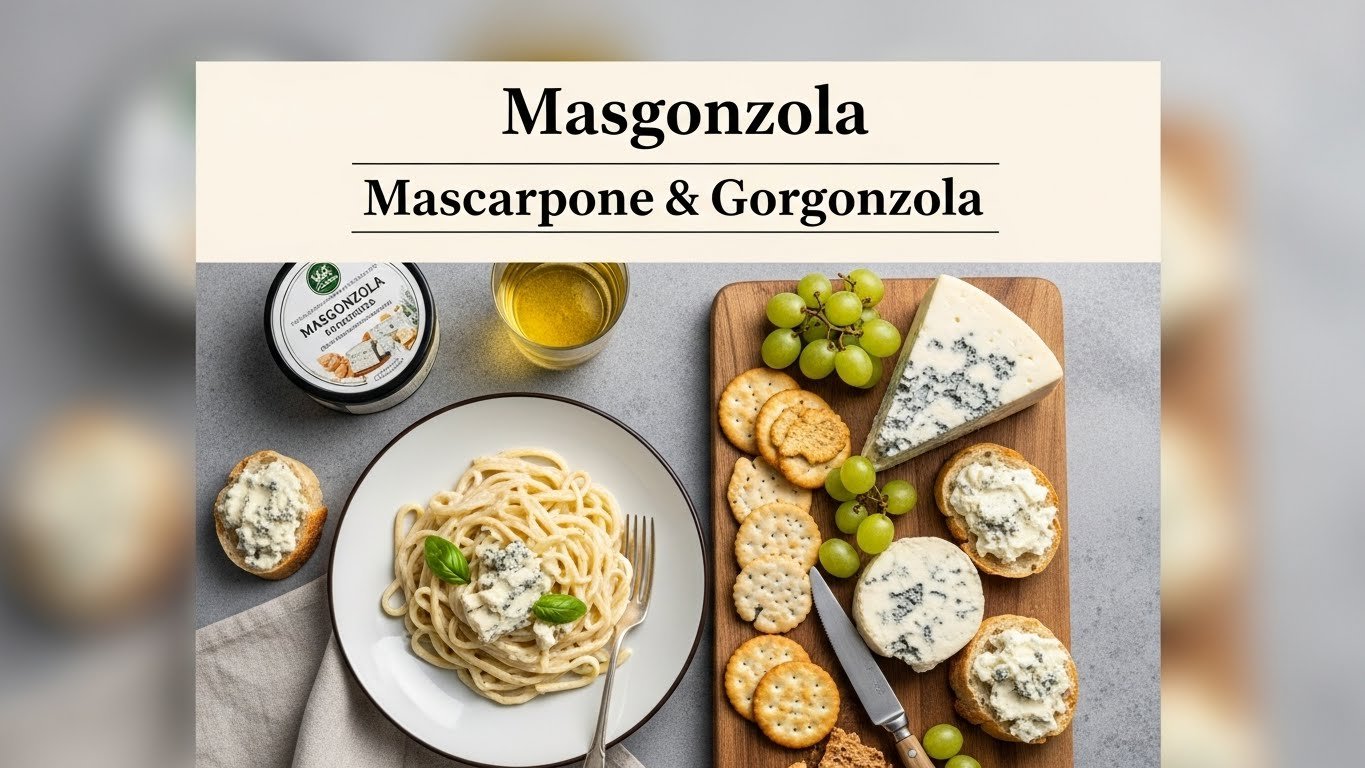
There are many ways to enjoy masgonzola. The simplest? Spread it on a piece of warm bread or crisp crackers. It melts beautifully, so it’s also perfect for stirring into hot pasta or risotto. Some people add it to sauces to bring depth and creaminess, while others use it on burgers, steak, or grilled vegetables for a pop of flavor. It also blends well into creamy dips or dressings. You can even use it as a topping for baked potatoes or pizza. The smooth texture makes it easy to cook with or use straight out of the container.
Serving Masgonzola on a Cheese Board
If you’re preparing a cheese board for a party or just want to treat yourself, add masgonzola to the mix. It pairs well with fresh fruit like pears, apples, and grapes. Add some honey, walnuts, or dried figs, and you’ve got a fancy but easy treat. Serve it alongside crusty bread, whole-grain crackers, and even mild cheeses like brie or goat cheese for contrast. To make things more fun, you can label it with a simple sign and watch your guests discover its creamy magic for themselves.
Health Benefits of Masgonzola
Cheese in moderation can be part of a healthy diet, and masgonzola is no different. It provides calcium for strong bones, protein for muscle health, and vitamin B12 for energy. The mascarpone side of masgonzola is higher in fat, but it also brings richness that helps with satisfaction—you won’t need a huge amount to feel full. Like all cheeses, masgonzola should be enjoyed in balance with other foods. If you’re looking for a cheese that offers flavor without needing big portions, this one is a great pick.
Best Dishes to Make With Masgonzola
Masgonzola can easily take your meals to the next level. Stir it into pasta dishes like gnocchi, spaghetti, or fettuccine for an extra creamy finish. Add it to mashed potatoes instead of traditional butter and cream. Use it in a simple sauce over grilled chicken or pork. Masgonzola also goes well in stuffed mushrooms, savory tarts, and even as a filling for ravioli. For something sweet and salty, try a small spoon of masgonzola on figs or dates. The possibilities with this cheese are endless, especially if you enjoy getting creative in the kitchen.
How to Store Masgonzola
To keep masgonzola fresh, store it in the refrigerator in an airtight container. It’s a fresh cheese, so it should be eaten within a few days after opening. Make sure to check for signs of spoilage, like a sour smell or off color. If the cheese becomes too hard or dry, it’s probably past its prime. When serving, let it sit at room temperature for about 15 minutes before eating. This helps bring out the flavor and makes it easier to spread or mix into recipes.
Where to Buy Masgonzola
You might not find masgonzola at every grocery store, but it’s becoming easier to find. Look in specialty cheese shops or delis that carry a wide selection of imported or artisan cheeses. Some larger supermarkets, especially those with a gourmet cheese section, might carry it. If it’s not labeled as masgonzola, ask for a “blend of gorgonzola and mascarpone”—it might be there under another name. You can also find it online from cheese retailers who ship dairy products straight to your door. Always check reviews and seller ratings when shopping online for food.
Is Masgonzola the Same as Dolce Gorgonzola?
A lot of people confuse masgonzola with dolce gorgonzola (also called Gorgonzola Dolce). Dolce gorgonzola is a milder, creamier version of regular gorgonzola. It is aged for less time and has a soft texture and sweet, gentle flavor. Masgonzola is different because it’s actually a blend of mascarpone (a totally different cheese) and gorgonzola, not just a young gorgonzola. Both are creamy and easy to spread, but masgonzola is even richer and less sharp. If you’re new to blue cheeses, both are worth trying.
Perfect Drinks to Pair with Masgonzola
When it comes to drinks, masgonzola pairs beautifully with many options. Wine lovers can try it with a glass of sweet white wine, like Riesling or Moscato, which balances the cheese’s salty tang. For red wine fans, a light-bodied red like Pinot Noir works well too. Beer drinkers might enjoy it with something malty and smooth, like a brown ale. If you don’t drink alcohol, pair masgonzola with sparkling water, apple cider, or even chilled grape juice. The key is to balance the cheese’s rich flavor with something slightly sweet or crisp.
Is Masgonzola Right for You?
If you’re curious about blue cheese but don’t always love how strong it can be, masgonzola offers a middle ground. It’s not too sharp, not too mild. It’s creamy, dreamy, and super versatile in both cooking and snacking. It won’t overpower your dish, but it will definitely stand out. Whether you’re making comfort food for yourself or looking to surprise guests on your next cheese board, masgonzola deserves a spot in your fridge. It’s the kind of food that makes both simple meals and fancy dishes extra special.
FAQs
Q1: What is masgonzola made of?
Masgonzola is a blend of mascarpone and gorgonzola cheese, giving it a creamy and tangy flavor.
Q2: Is masgonzola a real Italian cheese?
Yes, it comes from Italy and combines two well-known Italian cheeses: mascarpone and gorgonzola.
Q3: Can I cook with masgonzola?
Absolutely! It’s perfect in pasta, sauces, potatoes, or even as a dip or stuffing.
Q4: Is masgonzola spicy like other blue cheeses?
No, it’s milder than regular blue cheese, thanks to the creamy mascarpone base.
Q5: Where can I buy masgonzola?
Check cheese shops, gourmet markets, or online cheese stores. It may also be sold under another name.
Q6: How long does masgonzola last after opening?
It usually stays fresh for about 5–7 days in the fridge, stored in a sealed container.
Conclusion
Whether you’re a cheese lover or simply looking for something new to try, masgonzola is a delicious surprise. It mixes the best of both worlds—rich creaminess and bold flavor—into one magical bite. Add it to pastas, create a dreamy cheese spread, or stir it into mashed potatoes. You’ll find it’s not just another gourmet item—it’s a fun way to make everyday meals feel special. With more shops offering it and recipes popping up online, it’s the perfect time to give masgonzola a try. Your taste buds will thank you.