Table of Contents
Spongiotic dermatitis may sound confusing, but it’s a common skin condition that affects many people. If you’ve ever had a red, itchy rash that didn’t go away quickly, you might have experienced this type of skin inflammation. It can be irritating, uncomfortable, and sometimes even embarrassing. The good news is, it can usually be treated once it’s understood and properly diagnosed. In this guide, we’ll walk through everything you need to know in a friendly, easy-to-read way. You’ll learn what causes spongiotic dermatitis, how it feels, what it looks like, how doctors treat it, and what you can do at home to manage it. Whether you’re someone dealing with it now or just trying to learn more, this article will help you feel informed and ready to take action.
What Is Spongiotic Dermatitis?
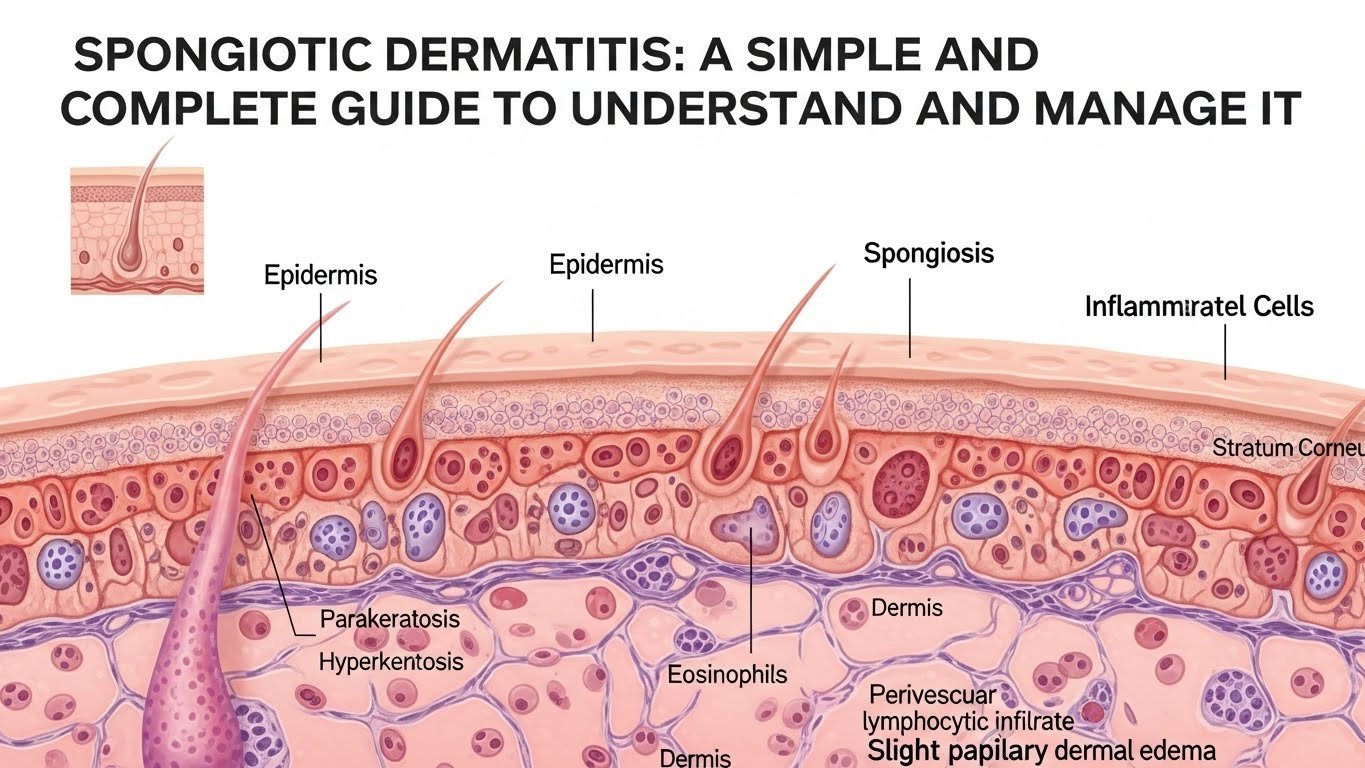
Spongiotic dermatitis is a term doctors use to describe a certain type of skin inflammation. Under a microscope, the skin’s layers can look swollen or puffed up—and that’s what spongiotic means. When this swelling happens, it causes the skin to become red, itchy, and irritated. This condition is not one specific skin disease by itself. Instead, it’s something doctors might see when they take a skin biopsy. It can show up in many skin problems, like eczema or allergic reactions. Though it may sound rare or scary, it’s actually more common than you think, and it often clears up with care and treatment.
What Causes Spongiotic Dermatitis?
Many things can trigger spongiotic dermatitis. One of the most common causes is an allergic reaction. This might happen when your skin touches something your body doesn’t like, such as metal, perfume, plants, laundry soap, or certain cosmetics. It can also be caused by irritants—things that bother the skin even if you’re not allergic to them. Dry air, hot water, or rough fabrics could be triggers. In some people, stress or illness can also play a role in flare-ups. Genetics might also make your skin more likely to react this way. The causes can be different for each person, which is why seeing a doctor is helpful.
What Are the Symptoms of Spongiotic Dermatitis?
The main signs of spongiotic dermatitis are red, itchy patches on your skin. These areas may also feel dry, rough, or scaly. Some people feel burning or stinging in the rash. In more serious cases, the skin might swell, form blisters, or even leak fluid. These symptoms can show up anywhere on the body, but they are often found on the hands, arms, legs, or face. The feeling can make it hard to sleep or focus. Because many skin problems look alike, a doctor or dermatologist may need to take a close exam or biopsy the skin to know for sure.
How Is Spongiotic Dermatitis Diagnosed?
To find out if you have spongiotic dermatitis, a doctor or dermatologist will examine your skin. They’ll ask questions about your symptoms—like when it started, what makes it better or worse, and what you’ve tried already. If needed, they may perform a skin biopsy. This means they gently remove a small piece of skin and look at it under a microscope. This is how they see the “spongy” swelling in the skin layers, which gives the condition its name. Blood tests usually aren’t needed, but sometimes they help rule out other health problems. Once diagnosed, the doctor can work with you to build a treatment plan.
What Are the Different Types of Spongiotic Dermatitis?
Though spongiotic dermatitis is a general term, there are types based on what causes the reaction. These include contact dermatitis, atopic dermatitis, nummular eczema, and dyshidrotic eczema. Contact dermatitis happens when your skin touches something that triggers a reaction. Atopic dermatitis is a long-term condition often seen in people with allergies or asthma. Nummular eczema shows up as coin-shaped patches. Dyshidrotic eczema causes small, itchy blisters on your hands or feet. Though they all look a bit different, they may all show spongiosis in skin samples. Knowing your specific type helps pick the best treatment.
How Is Spongiotic Dermatitis Treated?
Treatment for spongiotic dermatitis usually depends on what’s causing it. The first step is to remove or avoid the trigger—like switching soap, changing clothes, or avoiding harsh weather. In many cases, doctors recommend topical creams. These include corticosteroids that help lower redness and itching. For more serious cases, doctors may give light therapy, stronger prescription creams, or even oral medicine. Gentle skincare is also important. Use mild cleansers, pat your skin dry (don’t rub), and always keep your skin moisturized. Healing takes time, but with the right routine, most people see big improvement within weeks.
Everyday Tips to Prevent Flare-Ups
Living with spongiotic dermatitis means taking care of your skin every day. Here are some simple tips that can help. Try to avoid hot showers and stick with lukewarm water instead. Always apply moisturizer right after bathing to lock in moisture. Choose fragrance-free soaps and laundry products made for sensitive skin. Keep your nails short to avoid damage if you scratch. Wear cotton clothing that lets your skin breathe. Try to keep stress low by getting enough sleep and taking breaks when needed. Even small changes can make a big difference in keeping your skin calm and clear.
Home Care Remedies That Help

While doctor-approved treatments are important, you can also support your skin from home. For spongiotic dermatitis, cold compresses help ease itching. Oatmeal baths are gentle and soothing—add ground oats to warm water and soak for 10–15 minutes. Coconut oil or aloe vera gel may also reduce dryness and redness. Always test on a small spot first to make sure your skin doesn’t react. Drinking water, eating healthy, and taking care of your body helps your skin heal better. Just remember that these remedies support, not replace, medical treatment. Talk to your doctor before trying anything new.
What Happens If It’s Left Untreated?
If spongiotic dermatitis is not treated, the skin can get worse. More itching can lead to more scratching. This breaks the skin and can cause open sores, infections, or permanent marks. Chronic irritation may lead to thick, hardened skin over time. You might also notice the rash spreading or changing shape. Without calming the inflammation, the skin struggles to repair itself. That’s why early treatment is important. Even if the symptoms seem small at first, it’s better to know what’s going on and stop it before it gets worse.
Living With Spongiotic Dermatitis: Patient Stories
Many people live with spongiotic dermatitis and manage it well. Jane, a teacher, says switching to fragrance-free laundry soap made a big difference for her. After struggling with itchy hands, she got a diagnosis and followed her treatment plan—and now feels comfortable again. Alex, a college student, found that stress was a major trigger. After doing yoga and journaling, his skin improved alongside his mental health. People like you are finding answers, support, and relief. You’re not alone. Everyone’s journey is different, but sharing tips and being open can really help.
FAQs
Q1: Is spongiotic dermatitis the same as eczema?
They are closely related. Spongiotic dermatitis often shows up in eczema and allergic skin conditions.
Q2: Can spongiotic dermatitis be cured?
There’s no full cure yet, but symptoms can often be controlled very well with treatment and care.
Q3: What triggers spongiotic dermatitis?
Triggers include allergens, irritants, stress, weather, certain soaps, and harsh chemicals.
Q4: Is it contagious to others?
No. Spongiotic dermatitis is not contagious and cannot be passed from person to person.
Q5: Can diet affect this condition?
In some people, certain foods may worsen skin problems. It’s helpful to keep a diary and notice patterns.
Q6: Should I see a doctor or dermatologist?
Yes. A professional can give a clear diagnosis and help create a plan to treat your skin safely.
Conclusion
Dealing with spongiotic dermatitis can feel overwhelming at first, but it doesn’t have to stay that way. Now that you understand what it is, what causes it, and how to manage it, you’re one step closer to healthier, more comfortable skin. Whether you’re just noticing symptoms or have lived with this condition for a while, it’s never too late to get better treatment and feel more in control. Be kind to your skin. Follow your doctor’s advice. Try simple changes at home. And remember—you’re not alone. Many others are walking this road with you, and with the right help, bright, clear days are possible again.